Wanting ≠ Doing
We often say (or think), “If they wanted to, they would.” It’s a blunt, black and white way to call out someone’s lack of follow-through. But the truth is, human behavior is far more complicated. It’s not as simple as most people believe it is. Neuroscience and psychological research show that wanting something (desire) is only part of the equation, many other brain systems and constraints influence whether someone actually does something.
In this post, we’ll lay out the neuroscience behind why wanting ≠ doing, and why that common saying ignores crucial pieces of how our brains actually work. Let’s get down and nerdy with it.

1. Two Different Brain Systems: Wanting vs Doing
Motivation vs. Execution: The brain has separate neural systems for “wanting” (motivation) and for “doing” (action). Wanting is heavily tied to dopamine and reward pathways in the nucleus accumbens, while execution depends on the prefrontal cortex (PFC), the part of the brain responsible for planning, decision-making, and impulse control.
The prefrontal cortex is not fully developed until around 25 years of age. Recent studies show that for men, it may be even later than that.
This means a person can genuinely want to do something, but if their executive circuits aren’t in sync, it may result in lack of follow through.
Does your partner or someone you know, constantly tell you they want to take a vacation, want to eat healthier, or exercise more? Then you wait and wait and wait, but nothing happens? The disconnect between motivation and execution is why nothing happened.
2. The Limits of Executive Function
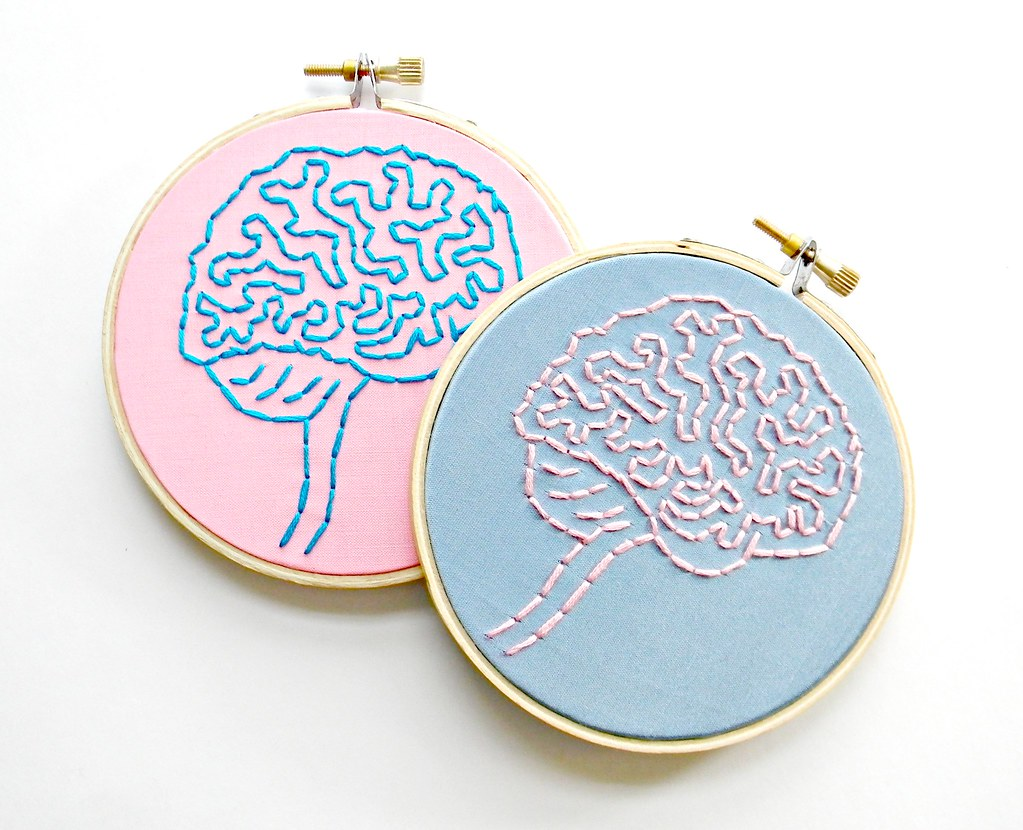
Executive functions such as working memory, impulse control, and task initiation are located in the PFC. Refer to the picture above for the location of the PFC. That’s why high contact sports like football and soccer can damage the PFC which results in memory loss and early onset Alzheimer’s or dementia.
These functions are not unlimited. When someone is stressed, tired, emotionally overwhelmed, or cognitively taxed, the PFC’s capacity to plan and act can become significantly impaired.
Mom Brain
Think of the term “mom fog”. After giving birth, many women report feeling like their brains aren’t working like they used to. They forget a lot of things they typically remember and they have trouble with impulse control and planning. They may, however, know exactly why the baby is crying or that they baby needs to be fed in the next hour.
The brain in a new mom changes physically as well as emotionally to accommodate new tools and systems to work in order to take care of a newborn. I think along with a OB GYN follow up, women should also see a psychologist because of these biological changes.
In practical terms, even a strong intention (“I want to do this”) can collapse if the brain doesn’t have the bandwidth to execute.
Read that again
…IF THE BRAIN DOESN’T HAVE THE BANDWIDTH TO EXECUTE…
3. Autopilot Mode: The Default Mode Network (DMN)
The Default Mode Network (DMN) is a set of brain regions that is active when we are not focused on external tasks. Some examples include when we’re daydreaming, ruminating, or just on “autopilot.” PubMed+1
Research suggests the DMN helps with automated, memory-based behaviors because it enables rapid, low-effort responses in predictable contexts. PubMed
Very similar to muscle memory. An example is your daily commute. It’s something that just happens and over time you just do it without thinking about where to turn, how to get there.
Switching from this autopilot mode into goal-directed action (engaging the PFC) requires neural energy, which can be difficult if someone is already depleted. Depletion could mean stress over-load, decrease sleep, decrease hydration, decrease food intake. A lot of the burn out culture puts many people in this category.
4. Habit Circuits vs. Conscious Intentions
Habits are supported by deeper brain structures (like the basal ganglia) that operate quickly and efficiently. The basal ganglia is part of the limbic system which is pictured below. The limbic system is responsible for regulating emotion, motivation, behavior and memory.

These habit circuits are often stronger than our conscious goals. When someone is tired, emotionally triggered, or mentally overloaded, habit pathways can override their intentional plans.
That’s why even when intentions are real, old patterns tend to win, especially if the brain’s “executive” system is weak or tired. Old habits or old patterns are hard to break because these have developed over time. You can’t easily break something that has been developed over months, years or generations.
There’s a conscious rewiring of the brain (neuroplasticity) in order to create a new habit or change old patterns. We all can agree that change is not easy, this is the neuroscience behind why it’s not easy. It takes time, repetition and consistency. Knowing the science behind it can help you provide grace for yourself or for others to make that change.
5. Emotion Hijacks Behavior
The amygdala, a key structure in our emotional brain, can interfere with the PFC’s ability to function when someone feels threatened, anxious, or emotionally vulnerable. Think of the amygdala as the threat detector in your body. If it senses a threat (a dangerous animal or even a tone that could lead to conflict) your amygdala sounds an alarm and triggers your flight, fight, freeze or fawn response.
In those moments, even if someone deeply wants to connect, apologize, or take action, their emotional brain may block them. Safety first. If you think about a primitive animal, they will prioritize safety at all cost. A gazel will run for miles and miles to achieve safety.
This is indicative of “not wanting”; it’s a primitive protective neural response. It usually happens unconsciously.
Fun Fact: a woman’s amygdala significantly grows after giving birth. What does this mean? It means that women are in survival mode, flight/fight/freeze/fawn mode during their postpartum. This explains why women are overwhelmed, full of emotion (plus the hormone fluctuations) all seemingly out of their control.
6. Readiness Potential: The Brain Acts Before We Decide
One of the most striking findings in neuroscience is the readiness potential (RP). This is a measurable buildup of neural activity in motor areas that precedes conscious awareness of a decision to act. PubMed+1
In Libet’s famous experiments, the RP began hundreds of milliseconds before participants reported a conscious intention to move. OUP Academic+1
This suggests that some of our actions are initiated unconsciously, meaning our conscious “wanting” may follow brain processes that have already started.
7. Reconciling Science With Compassion: A Better Saying
Given all this, a more accurate (and compassionate) way to think about human behavior might be:
“If they had the emotional safety, cognitive capacity, and neural resources to act on their intention — they likely would.”
This reframing acknowledges that behavior isn’t just about desire, it’s shaped by capacity, neurobiology, context, and emotional state. It’s not fair to claim that a person didn’t want to eat healthy because I truly believe that they did. But the second half of the equation wasn’t met, therefore it wasn’t executed.
What’s the solution? Acknowledgment and awareness is the first step. I do not think Ronny is aware there is a disconnect there, despite my telling him multiple times there’s a disconnect. The person needs to acknowledge that there is a disconnect first and foremost.
After that, they can then make conscious decisions to execute. I want to eat healthier → I am having a salad for lunch. I want to spend more time together → I planned a date for us this friday.
8. Why This Matters for Relationships & Boundaries
When we default to “If they wanted to, they would,” we are misjudging people, jumping to conclusions, simplifying their struggles, or blaming them unfairly without understanding the full picture.
But if we understand the neuroscience that behavior, the “doing” portion, depends on many internal systems then we can hold healthier attainable boundaries and ask better questions:
- Do they have the bandwidth?
- Are they emotionally safe enough to act?
- Are they stuck in a habit loop?
- Is fear or anxiety blocking them?
That kind of insight creates space for both accountability and empathy. It doesn’t excuse behavior and you are not obligated to accept certain behaviors. But it allows to slow down the pace of conversation and opens the door to understanding and connection.
The Takeaway
The saying “If they wanted to, they would” may feel powerful and on the surface, it makes sense, but it doesn’t hold up under scientific scrutiny. Human behavior is driven by more than just will or desire.
Our brains are complex. Humans are complex. That’s what distinguishes us from primitive animals. We have a higher executive functioning brain. We need to account for neural systems, emotional regulation, habits, and unconscious processes. All of which are fueled by our experiences and emotions.
If you’re working on healing, setting boundaries, or communicating better, understanding this complexity allows you to act with both compassion and clarity. It allows for humans to have human interactions more complex than we recognize.
References (Sources)
Model of DMN as evaluating & predicting behavior: PubMed
Libet, B., Gleason, C. A., Wright, E. W., & Pearl, D. K. (1983). Time of conscious intention to act in relation to onset of cerebral activity (readiness-potential). Brain, 106(3), 623–642. OUP Academic
Schlegel, A., Alexander, P., Sinnott-Armstrong, W., Roskies, A., Tse, P. U., & Wheatley, T. (2015). Hypnotizing Libet: Readiness potentials with non-conscious volition. Consciousness and Cognition, 33, 196–203. New Dualism
Recent work re-evaluates the RP: What Is the Readiness Potential? PubMed
Research on the Default Mode Network and its role in automated behavior: PubMed

 using WordPress and
Comments are closed